- Professor
- Graduate Faculty
Biography
Biography
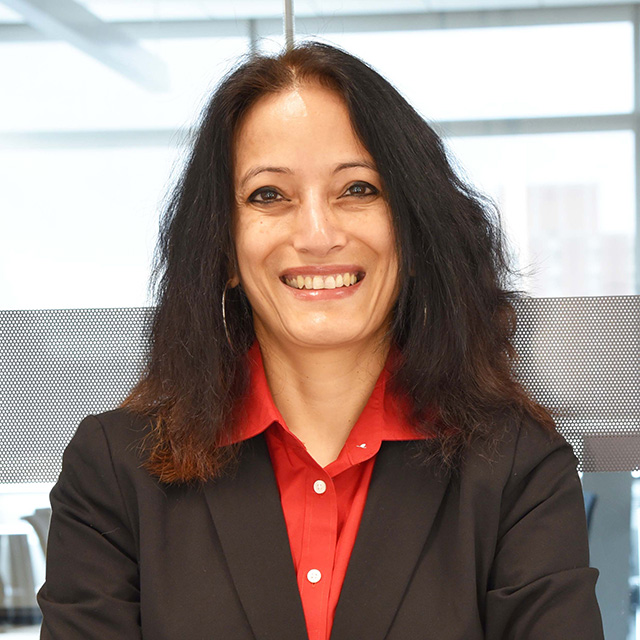
Porismita Borah (PhD, University of Wisconsin-Madison) is a Professor at the Edward R. Murrow College of Communication, and a graduate faculty in the Prevention Science program. Borah is the Director of the Digital Media & Society Lab and the Co-director of the Murrow Virtual Media Lab at Washington State University. Borah primarily studies discourse on digital platforms as well as message effects in the context of both health and politics. Within health communication, she has extensively studied health promotion and message design including vaccines and substance use. In political communication research, Borah contributes to the understanding of the role of news media, information source use, message design and their effects, and individuals’ attitudes and behaviors. Core variables of interest in both health and politics are examining moderating and mediating factors such as message frames, information processing, media literacy, political ideology, or psychological mechanisms. Borah’s most recent work has examined misinformation and disinformation, the politicization of health, and mitigating the effects of misinformation including correction strategies and the role of AI. Borah’s research program highlights her commitment to an interdisciplinary and multi-methodological approach to communication at both the theoretical and applied levels. She works with researchers from the social sciences, computer science, engineering, health sciences, and the humanities.
Borah’s work has been published in top journals such as Journal of Communication, Political Communication, Journal of Computer-Mediated Communication, Health Communication, and New Media and Society. Borah has received funding for her research from multiple sources including the National Institutes of Health, the National Science Foundation, Social Science Research Council, and the Poynter Institute, totaling more than 9 million.
Borah’s research has resulted in multiple collaborations with faculty and graduate students in WSU as well universities across the globe including University of Vienna, Austria; University of Salamanca, Spain; Universidad Catolica De Chile, and several universities within the U.S. Borah serves as the Mass Communication Research Center Fellow, University of Wisconsin-Madison and is affiliated with multiple research centers and groups including Democracy Research Unit, University of Salamanca; Media and Democracy Data Cooperative, University of Texas; and Social Media and Democracy, University of Wisconsin. In the past, Borah has served as Senior Research Fellow at the University of Vienna, as well as at the Universidad Catolica De Chile. Borah is regularly invited to give talks and conduct workshops regionally, nationally and globally. A few recent examples include talks in Chile, India, Spain, Austria, and Armenia. Within the U.S., selected examples are invitations from Harvard Law School; University of Washington; University of Wisconsin-Madison; Wilson Center, Washington DC; and University of Texas-Austin.
Borah teaches courses in communication theory, research methods, health communication, public relations, and emerging technology. Since joining WSU, Borah has mentored more than 45 graduate students. Borah is currently the Editor-In-Chief for International Journal of Public Opinion Research, and she serves on the editorial board of multiple journals including Health Communication, Journal of Communication, and Communication Research. She also serves as an ad-hoc reviewer for more than 55 journals in communication and the social sciences. Before joining graduate school, Borah worked as a production executive in New Delhi Television (NDTV), in Delhi, India. To learn more about Borah’s work, please visit her website and her Google Scholar profile.
Education
- Ph.D., University of Wisconsin-Madison (Journalism and Mass Communications)
- M.S., Iowa State University (Journalism and Mass Communications)
Classes Taught
- COM 570 – Communication Theory (Graduate)
- COM 552 – Emerging Technology in Communication (Graduate)
- COM 564 – Quantitative Research Methods (Graduate)
- COMHLTH 570 – Health Communication and Behavior Change (Graduate)
- COM 562 – Crisis Communication (Graduate)
- COMSTRAT 561 – Persuasion for Professional Communicators
- COMSTRAT 309 – Quantitative Research Methods (Undergraduate)
- COMSTRAT 485 – PR Management and Campaign Design (Undergraduate)
- COMSTRAT 275 – Misinformation and Social Media (Undergraduate)
Selected External Grants
- Course Correct: Precision guidance against misinformation, NSF, Convergence Accelerator Grant, Phase 2, 2022-2025, $5,000,000
- Communication modeling and intervention research on “two cancer” prevention for young women in the context of health communication, The National Social Science Fund of China, 2022-2023, $28662
- Media & democracy in the age of miscommunication. University Partnership: Washington State University & University of Novi Sad, Serbia, 2022-2024, $99,970
- How large-scale identification and intervention can empower professional fact-checkers to improve democracy and public health, NSF, Convergence Accelerator Grant, Phase 1, 2021-2022, $750,000
- Youth political socialization, journalism & social media: Understanding democracy in contentious times. Spanish National Research Agency’s Program for the Generation of Knowledge and Scientific Strengthening Research 2021-2022, $198,401
- Identifying and implementing effective visual enhancements to correct high-priority COVID-19 misinformation. Poynter Institute, 2020–2021, $9,658
- Multidisciplinary undergraduate research training in wearable computing. NSF, 2019-2022; $259,199
- A randomized trial of letting go and staying connected, an interactive parenting intervention to reduce risky behaviors among students. NIH, 2016-2023; $3,169,671
Selected Publications
- Borah, P. (2025). Credibility perceptions of information and vaccine intention: The role of collective vs. individual framing messages. Health Communication, 40 (6), 1115-1124. https://doi.org/10.1080/10410236.2024.2386718
- Cao, X*., Borah, P., Lee, D., Vishnevskaya, A., Su, Y., & Lorenzano, K. (2025). Beyond the post: The impact of politized anti-vaccine misinformation comments and challenges of correction on social media. Vaccine. https://doi.org/10.1016/j.vaccine.2025.127760
- Borah, P., Irom, B., Lee, Y. Lee, D*., Mu, D*., Vishnevskaya, A*., Yel, E*., & Price, R*. (2025). VR technology and humanitarian crisis: Political ideology and the intention to donate in the case of the Syrian refugee crisis. New Media & Society, 27(8), 4970-4994. https://doi.org/10.1177/14614448241247209
- Borah, P., Lee, D*., Lorenzano, K., Cao, X*. & Austin, E. (2025). Predictors of credibility perceptions: The moderating role of political ideology. Atlantic Journal of Communication. https://doi.org/10.1080/15456870.2025.2510334
- Borah, P., Gonzales, P*., & Gil de Zúñiga, H., (2025). “Stop the steal”: Misinformation correction and misperceptions about election fraud. Online Information Review. https://doi.org/10.1108/OIR-08-2024-0512
- Himelboim, I., Borah, P., Lorenzano, K., Lee, J. & Cao, X*. (2025). If it Bleeds, it doesn’t lead: Emotional appeals and engagement in immigration and election conversations on Twitter. Journal of Broadcasting and Electronic Media, 69 (1-2), 1-23. https://doi.org/10.1080/08838151.2025.2459948
- Li, J*., Borah, P., Kang, J*., Kim, J*., Okada, T*., Shen, L*., Tao.R.*, & Yang, S*. (2025). Does news literacy help combat misinformation? The interplay of news literacy, political ideology, and ideological media use on COVID-19 misperceptions. Information, Communication, and Society. https://doi.org/10.1080/1369118X.2024.2341000
- Kim, J*., Zhang, Y., Borah, P. (2025). Second-level agenda setting effects of news media and public policy on social media discourse across platforms: Immigration during the COVID-19 Pandemic. Information, Communication & Society. 28(11), 1923-1944. https://doi.org/10.1080/1369118X.2024.2380759
* Indicates student author at the time the research was conducted.
**For full list of publications, kindly check https://shorturl.at/imRtR