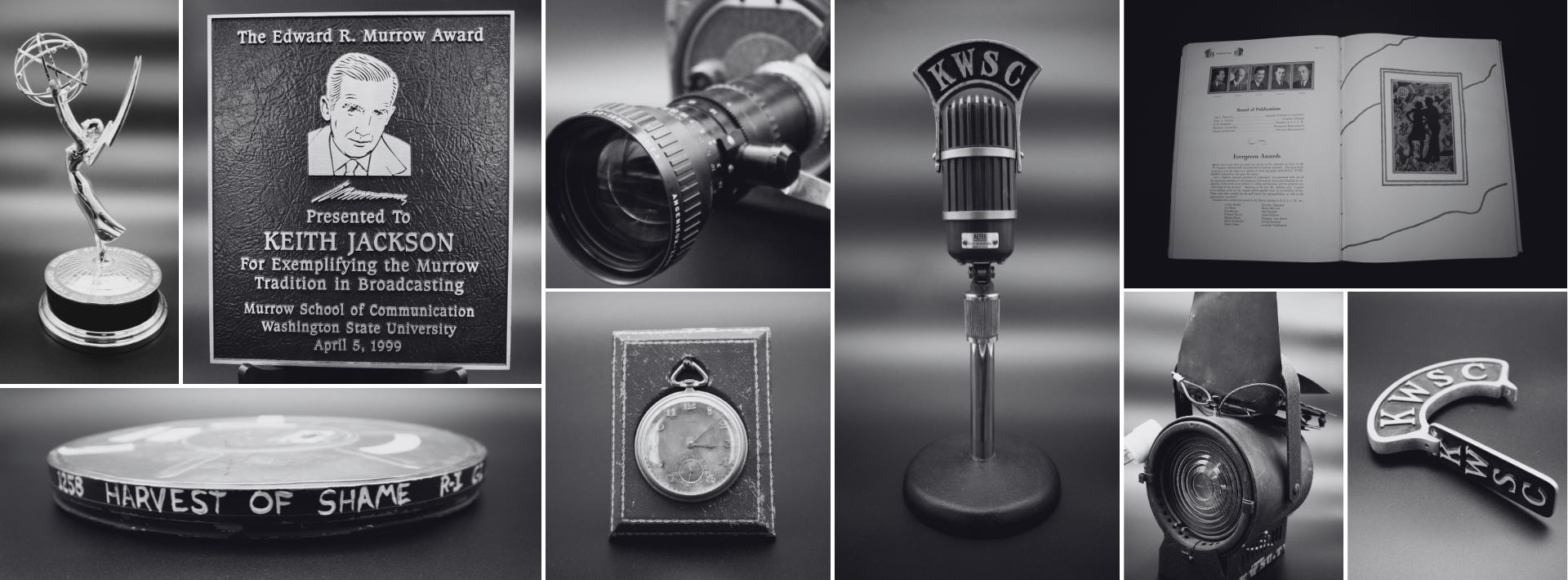
Murrow Artifacts
Edward R. Murrow College of Communication has a rich history shaped by innovation, hands-on learning, and generations of storytellers. This exhibit showcases key artifacts that trace the College’s evolution—from early student broadcasting to influential media leadership, reflecting the spirit that continues to define Murrow today.
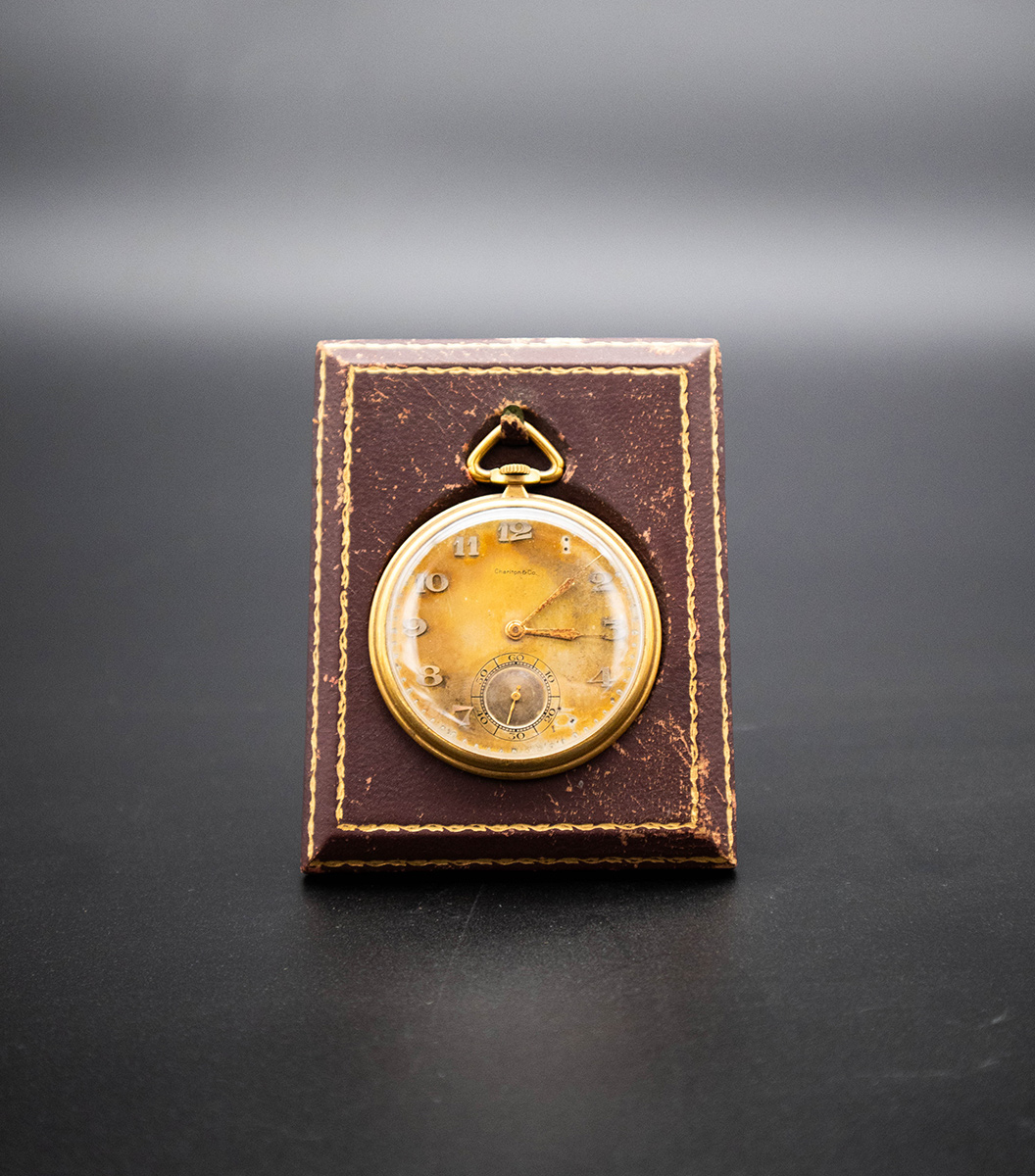
Murrow’s Watch
This pocket watch originally belonged to Edward Klauber, CBS Vice President and Edward R. Murrow’s first mentor.
Klauber appointed Murrow as Director of Talks in 1935 and later promoted him to European Bureau Chief in 1937, a role that enabled Murrow to assemble the legendary “Murrow Boys” team. The watch stands as a powerful symbol of Klauber’s pivotal role in launching Murrow’s historic career.
After Murrow’s passing, his widow Janet H. B. Murrow entrusted the watch to their grandnephew Joshua Murrow Nelson in 1982. In 2013, Nelson donated it to the Edward R. Murrow College of Communication, where it remains a prized artifact on display in Goertzen Hall, connecting the College to its remarkable legacy.
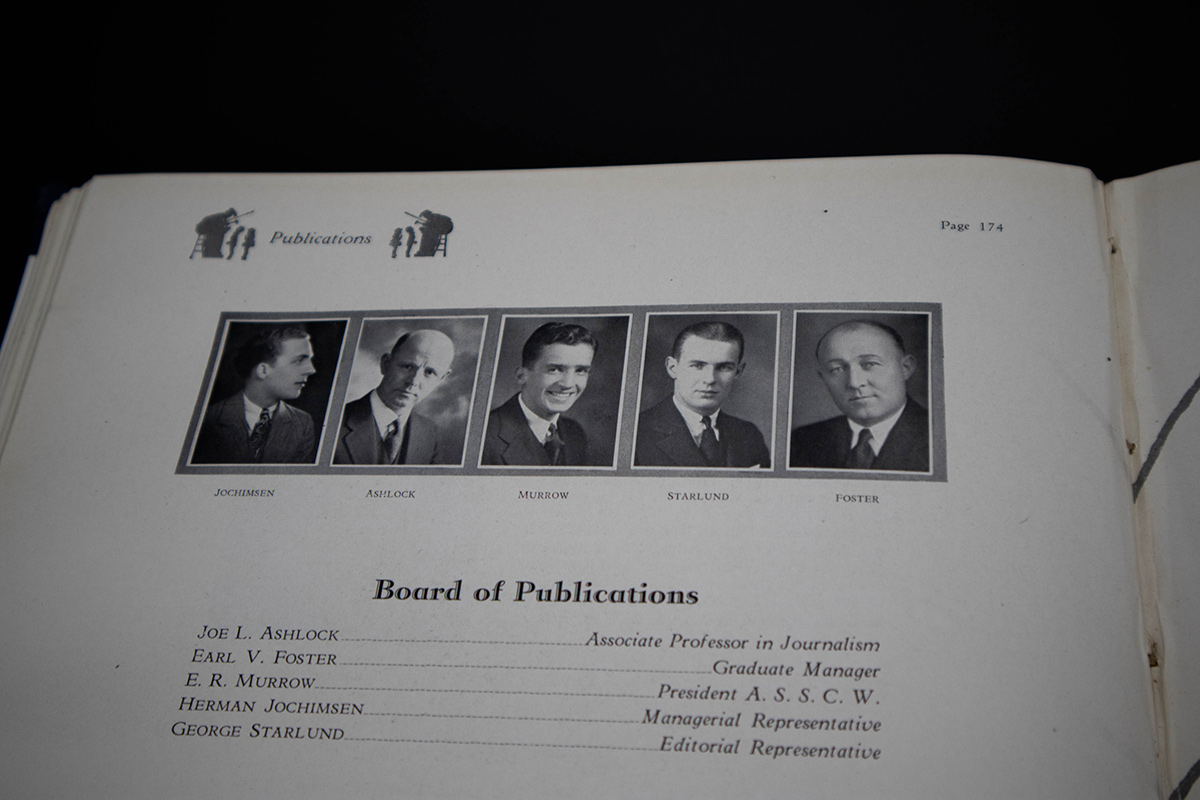
1930 Chinook Yearbook Entry
Murrow’s Chinook record captures him as an active member of a famed fraternity and the campus theater at Washington State College, where he graduated in 1930 with a degree in Speech. The senior yearbook highlights Murrow’s extensive extracurricular involvement, including membership in Kappa Sigma fraternity (one of the largest in the world) and the National Collegiate Players Dramatic Honorary. He served as president of the Associated Students of the State College of Washington, the National Student Federation of America (NSFA), and the Pacific Student Presidents’ Association—the first student from WSC to hold that position. Murrow was also a member of the honorary military society Scabbard and Blade, served as class president, participated in dramatics, and rose to the rank of cadet colonel in the R.O.T.C.
The yearbook shows Murrow in the lead role of the play Salamagundi, alongside other distinctions. His presidency with the NSFA later proved instrumental in securing his first position with CBS. These early forays into leadership and performance foreshadowed the eloquent and influential broadcaster he would become.
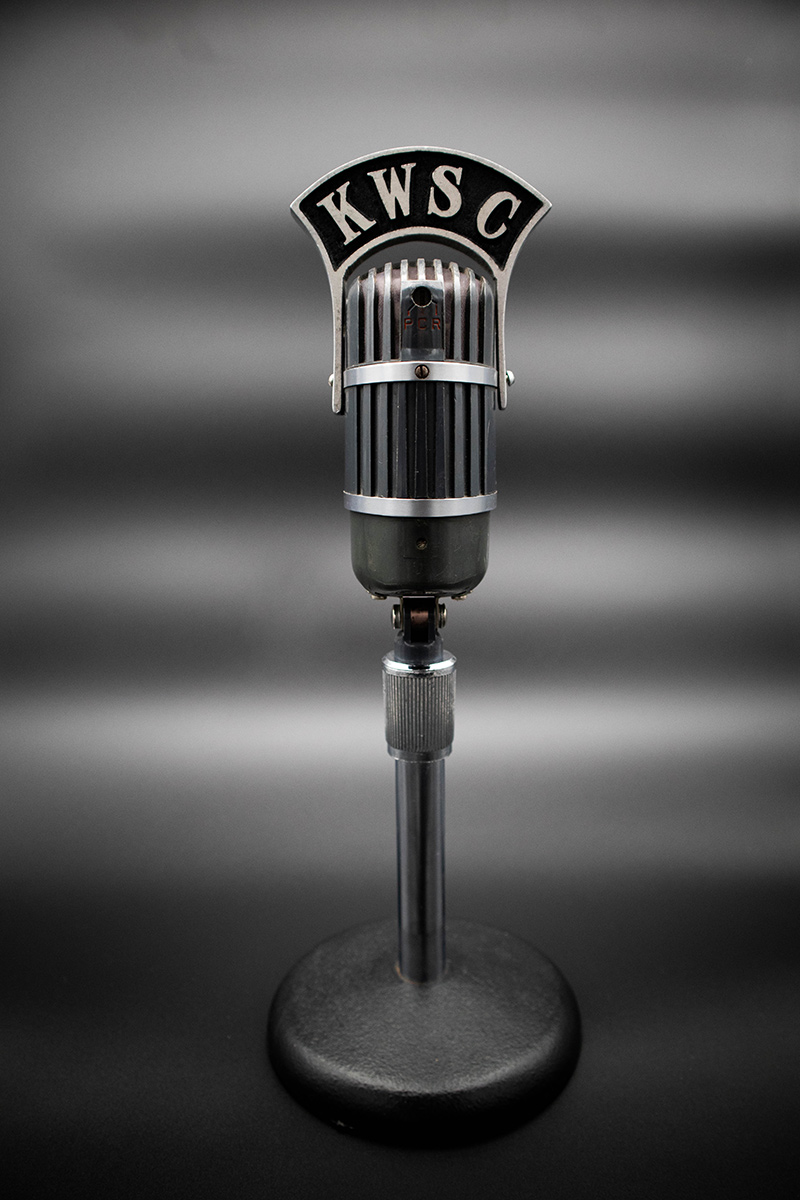
KWSC Microphone
Before Edward R. Murrow became a television icon, his roots were firmly planted in radio. Richard C. Hottelet, the last surviving member of the legendary “Murrow Boys,” reflected on Murrow’s passion for the medium: “He was highly talented on TV, but his heart was in radio.” – 2008 Murrow Communicator.
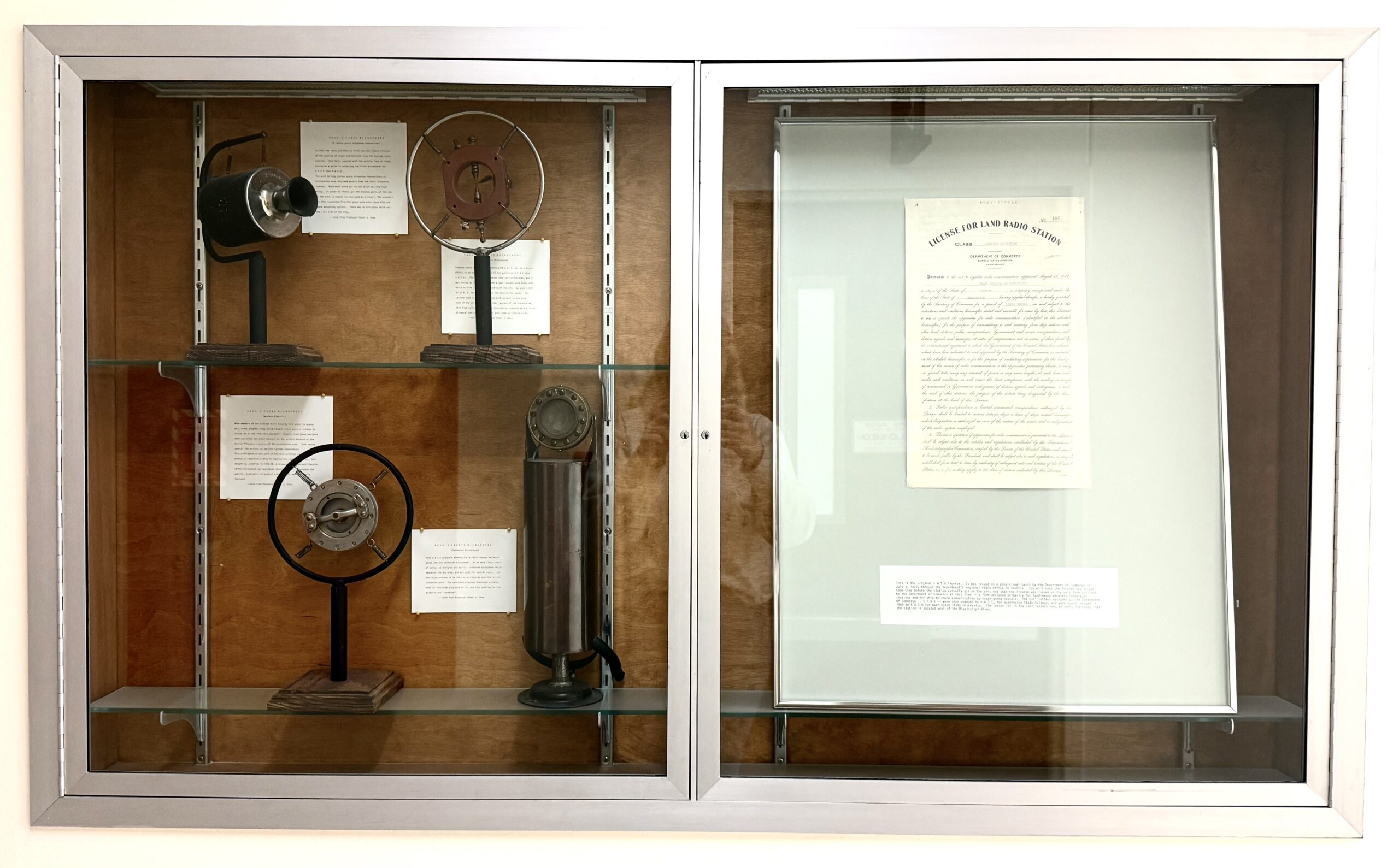
That passion began at Washington State College, and developed alongside the first campus radio station, KWSC, founded in 1922. Its earliest microphone was an improvised device—an old telephone mouthpiece mounted inside a soup can. From these humble beginnings, and under the instruction of Ida Lou Anderson, Murrow gained broadcasting skills he would later use to deliver his iconic wartime broadcasts from London during World War II.
[Washington State Magazine], [Online Encyclopedia of Washington State History]
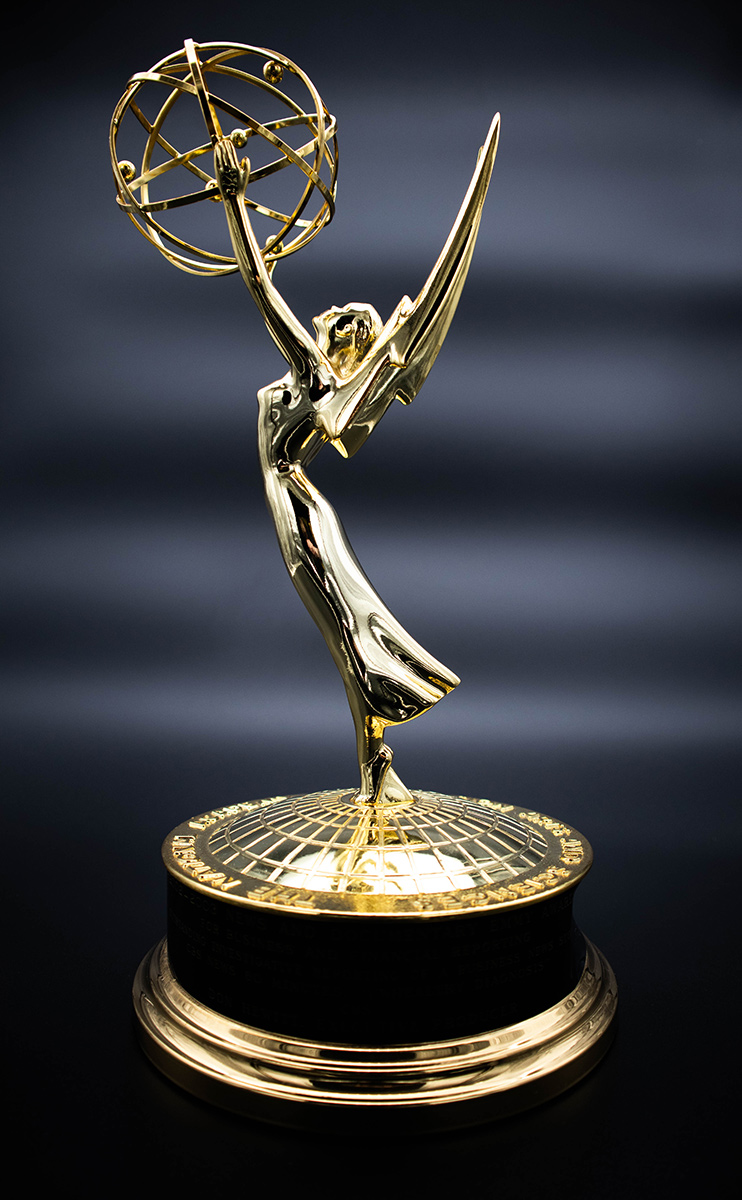
Don Hewitt’s Emmy
This artifact traces the evolution from radio to television. Murrow didn’t just broadcast news — he pioneered the form, producing See It Now (coproduced by Fred W. Friendly and host Edward R. Murrow), and insisting that journalistic integrity must remain core, even as technology advances.
Don Hewitt, who worked with Murrow and produced See It Now, later created 60 Minutes in 1968. His eight Emmy wins, Founders Emmy, Lifetime Achievement Emmy, and other honors echo Murrow’s legacy in impactful, narrative journalism. Don Hewitt gifted his Emmys to Murrow College, one of which you can see here, reflecting his true admiration of Murrow, stating “I would give up all my Emmys… I’d swap them all for this one award. They can take ‘em all away, and I’d keep this one.” He directed and produced the first televised presidential candidate debates with John F. Kennedy and Richard Nixon in 1960, one of his many contributions and topics addressed during his acceptance of the 2008 Edward R. Murrow Award for Lifetime Achievement in Broadcast Journalism.
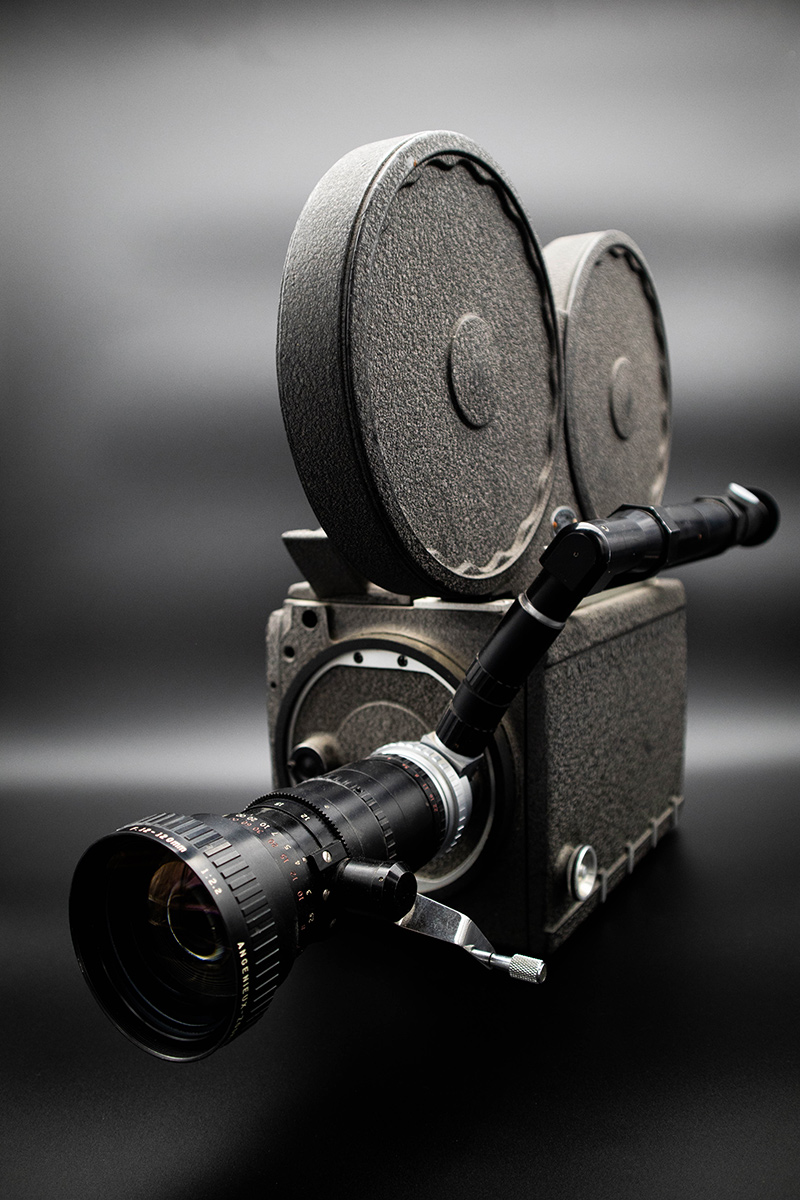
Early Camcorder
The Auricon Pro‑600 Special is a lightweight, portable 16mm sound‑on‑film camera widely used in news and documentary production during the mid‑20th century. Its ability to record synchronized sound directly onto film made it a reliable tool for field reporting before the rise of portable video. The improved “Special” model accepted 400‑foot magazines and offered quieter, more efficient operation, making it especially valuable for television journalists working on location. As Murrow College marks its 50th Symposium, the Pro‑600 Special highlights the technological foundations that shaped modern broadcast storytelling and reflects the hands‑on reporting traditions that continue to define Murrow’s legacy today.
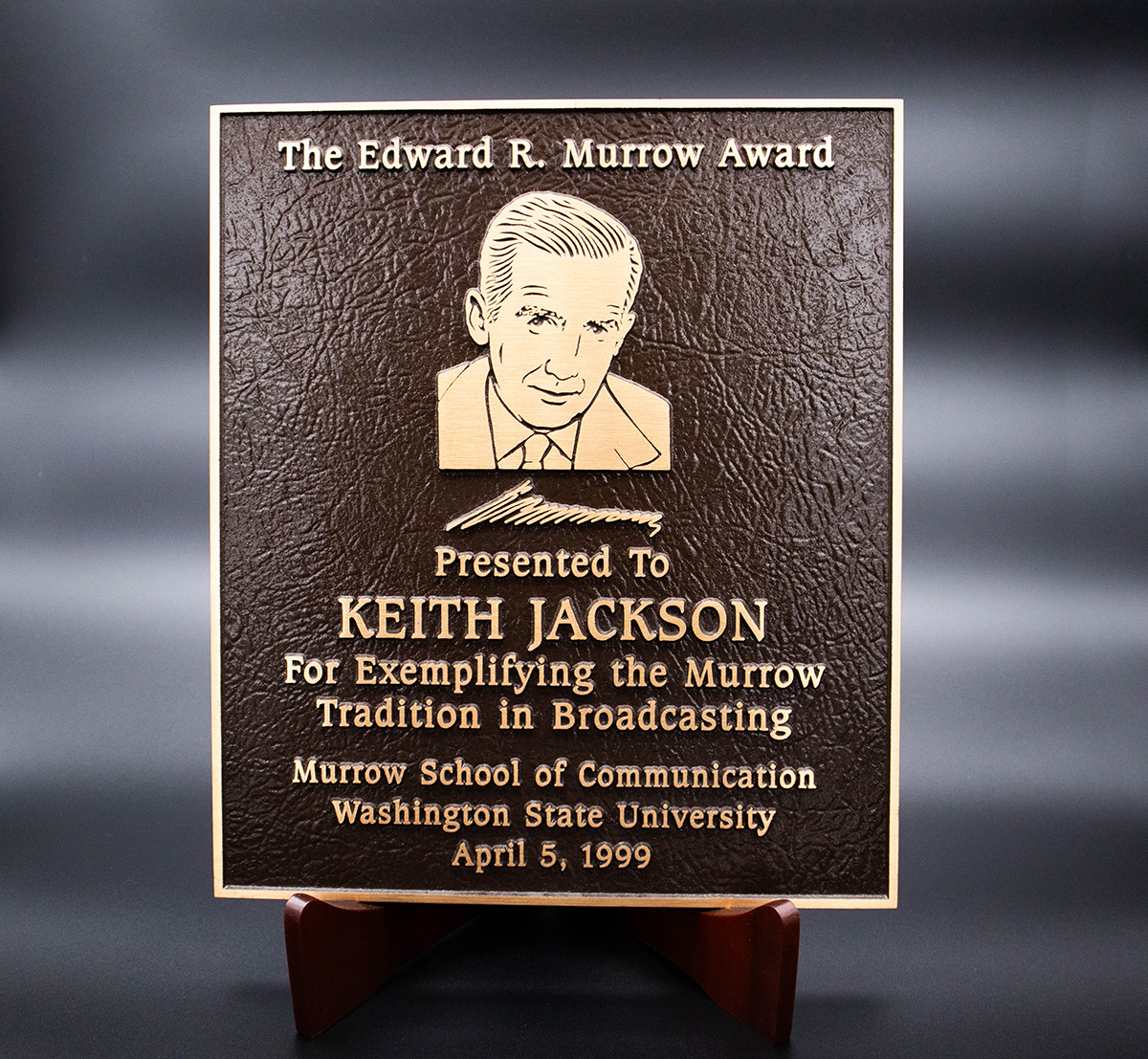
Edward R. Murrow Award Recipients
The faculty of the Murrow College of Communication (then the Murrow School) began recognizing top communication leaders in 1990. Past awardees include:
- Keith Jackson – renowned sports broadcaster
- Christiane Amanpour – international correspondent
- Don Hewitt – television producer, See It Now, 60 Minutes
- Helen Thomas – trailblazing White House correspondent
- Judy Woodruff – anchor and journalist
- Charles Kuralt, Fred Friendly – celebrated broadcasters and editors
- ProPublica – investigative journalism nonprofit
[Radio Television Digital News Association]
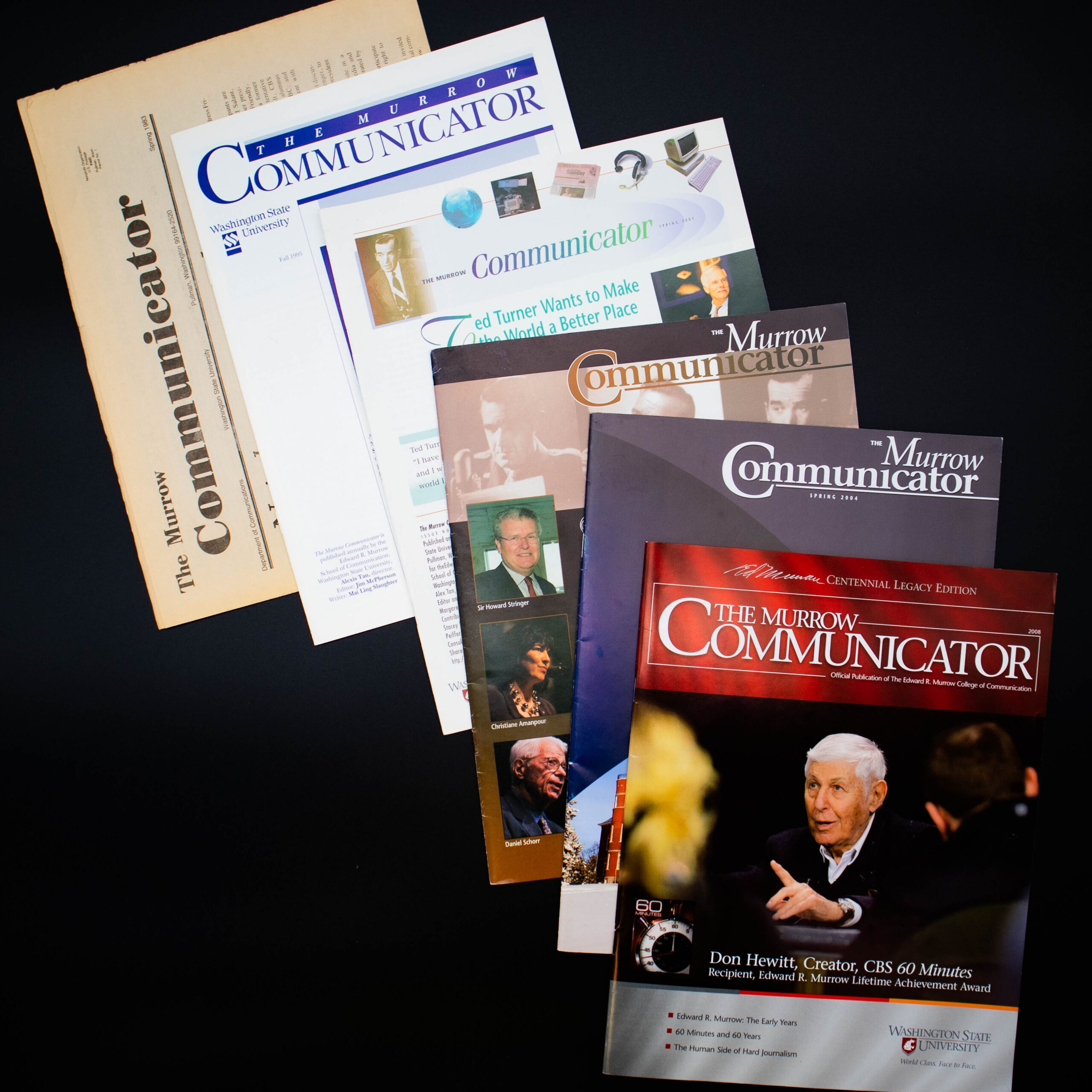
The Murrow Communicator
The Murrow Communicator began as a newsletter for faculty, staff, and alumni of what was then the Department of Communications. As the department evolved, so did the publication. It eventually grew into a 26‑page, magazine‑style issue that recapped the most recent Edward R. Murrow Symposium, celebrated faculty and staff achievements, and showcased student work.
The idea is being reborn for this year’s milestone Symposium. Stay tuned!
Records Through Time
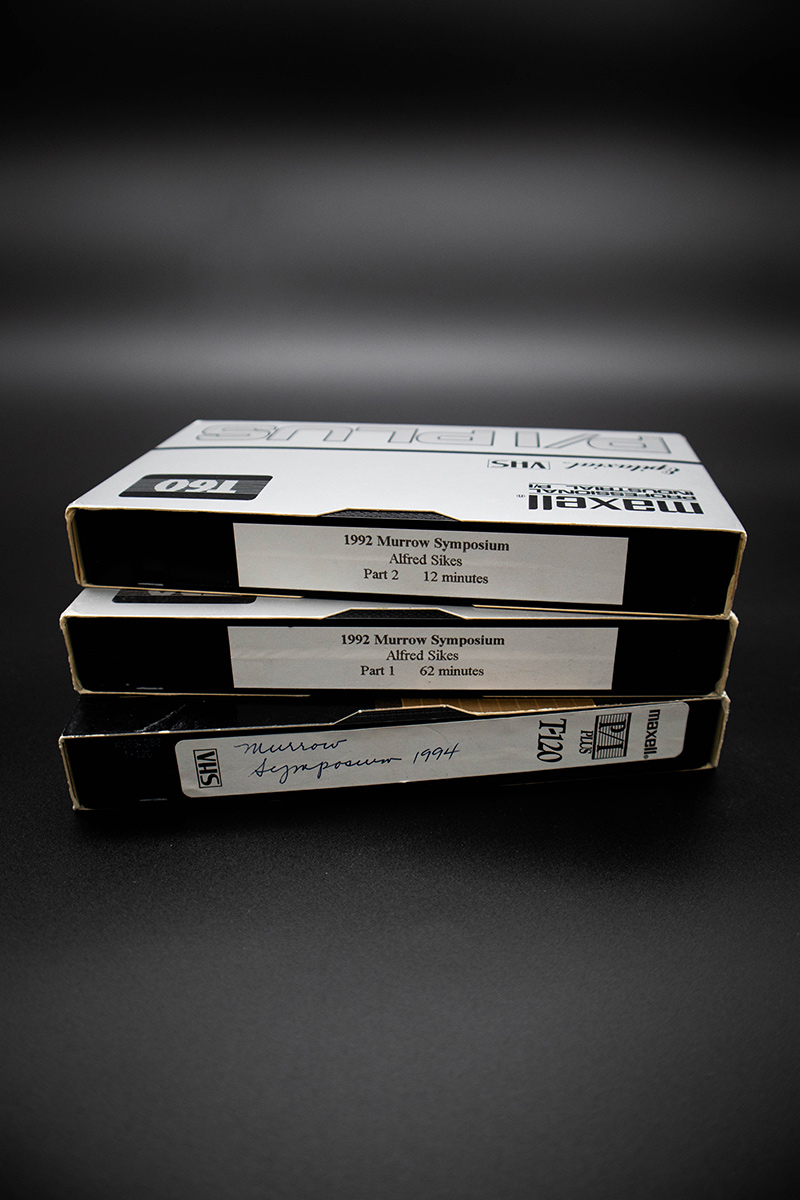
All of these formats – record, tape, and CD – used to record Murrow and the Murrow Symposium through time demonstrate the evolution of media-capturing technology.
Initiated when the Murrow Communications Center opened, the Symposium began in 1973. These tapes archive decades of vital conversations with luminaries like Charles Kuralt, Diane Sawyer, Howard K. Smith, and others, reflecting Murrow’s enduring influence on journalistic dialogue. [Archives West], [Murrow Symposium].
The earliest symposium recordings are just audio, then tape, then CD, and finally the digital medium of today.
Harvest of Shame Documentary
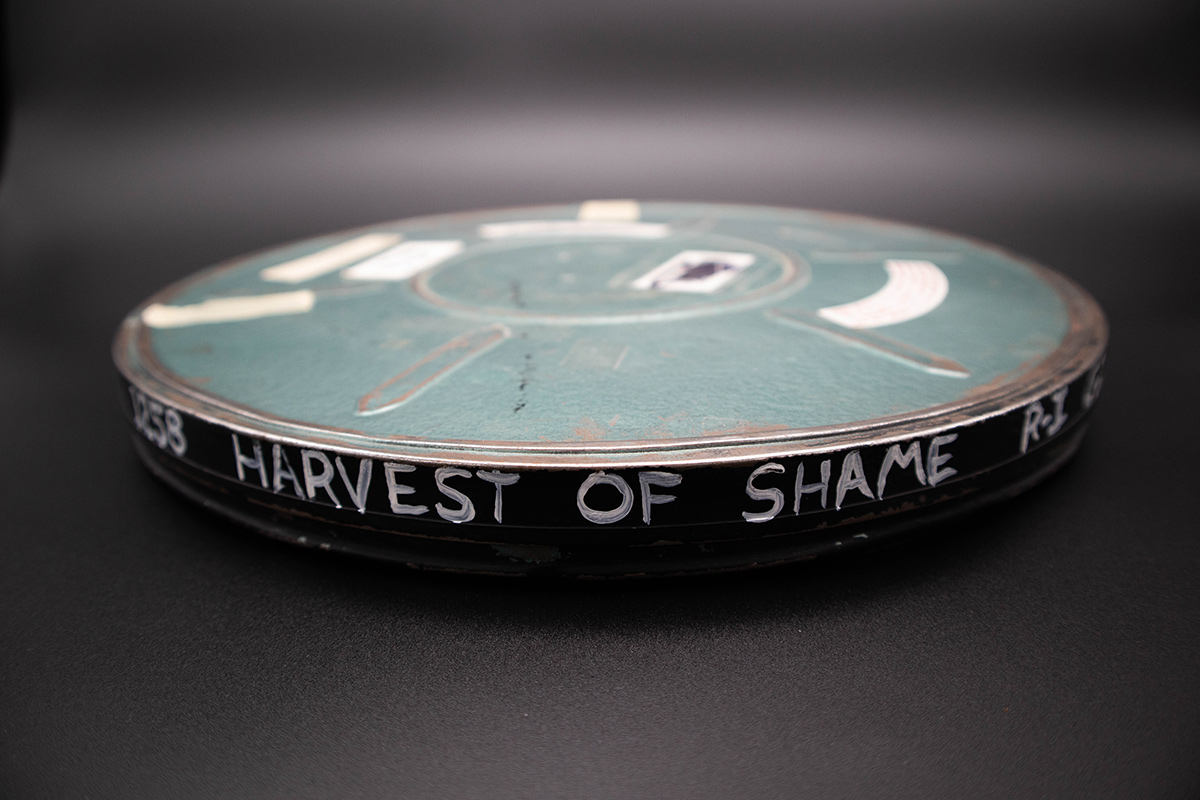
In 1960, journalist Edward R. Murrow aired Harvest of Shame, a groundbreaking television documentary that brought national attention to the largely unseen lives of migrant farm workers in the United States. Shown on Thanksgiving Day, the broadcast intentionally contrasted a moment of national celebration with stories of poverty, exploitation, and inadequate protections faced by those who harvested the nation’s food. Through direct testimony and stark imagery, Murrow challenged audiences to reckon with inequities embedded in everyday life.
The program stands as a lasting example of how broadcast journalism can move beyond reporting facts to question power, provoke public reflection, and uphold the media’s responsibility to the public good.
The Grass Roots Journal
The Grass Roots Journal was a student‑produced television series for KWSU‑TV, Washington State University’s PBS station. Created in the 1970s and 1980s, it explored the history, culture, and communities of the Palouse and the greater Inland Northwest. Hosted by Dr. Glenn Johnson and Barbara Dickinson, the program featured locally reported stories researched, filmed, and produced by WSU students.
A second‑season summary highlights segments on radio‑controlled gliders, the Moscow Free Transit System, falconry, and regional folklore. With a student crew of about forty working under producer Brian Murray, the series offered a vital window into otherwise undocumented local stories and provided hands‑on training that shaped generations of student storytellers.
Portrait in Jackson Hall
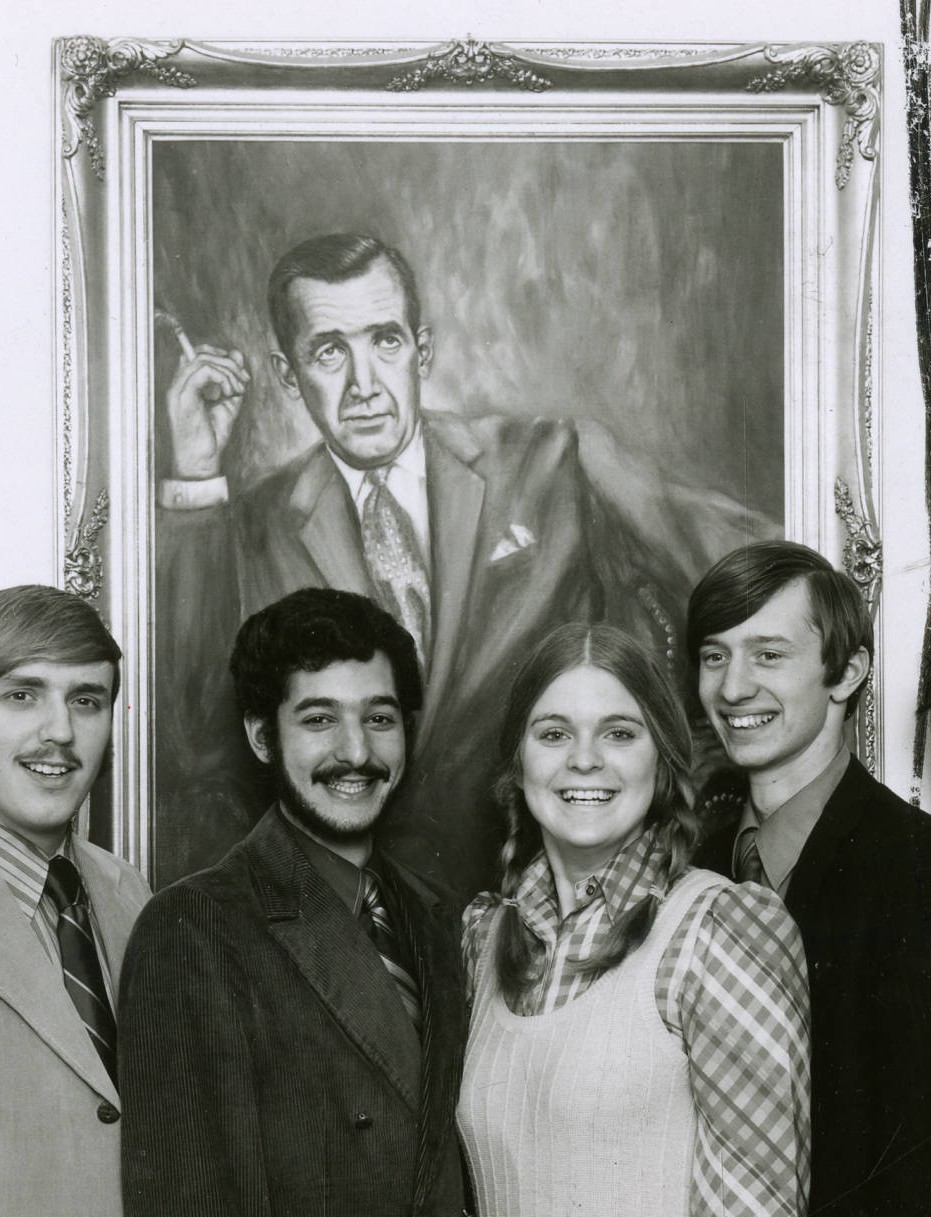
Murrow’s portrait in Jackson Hall serves as an enduring reminder of his principles: truthfulness, credibility, and courage in journalism—especially poignant for students walking past on their way to class. Painted by Spokane husband and wife artists, Mr. and Mrs. L. Wayne Curtis, and was unveiled in 1967 – the Pullman Herald, Thurs., May 18, 1967. It’s a longstanding tradition to leave a cigarette on Murrow’s portrait frame for his “ghost.” However, as a tobacco-free campus, we’re encouraging Murrow’s ghost to kick the habit and embrace a smoke-free legacy.
Murrow’s Door in Goertzen Hall
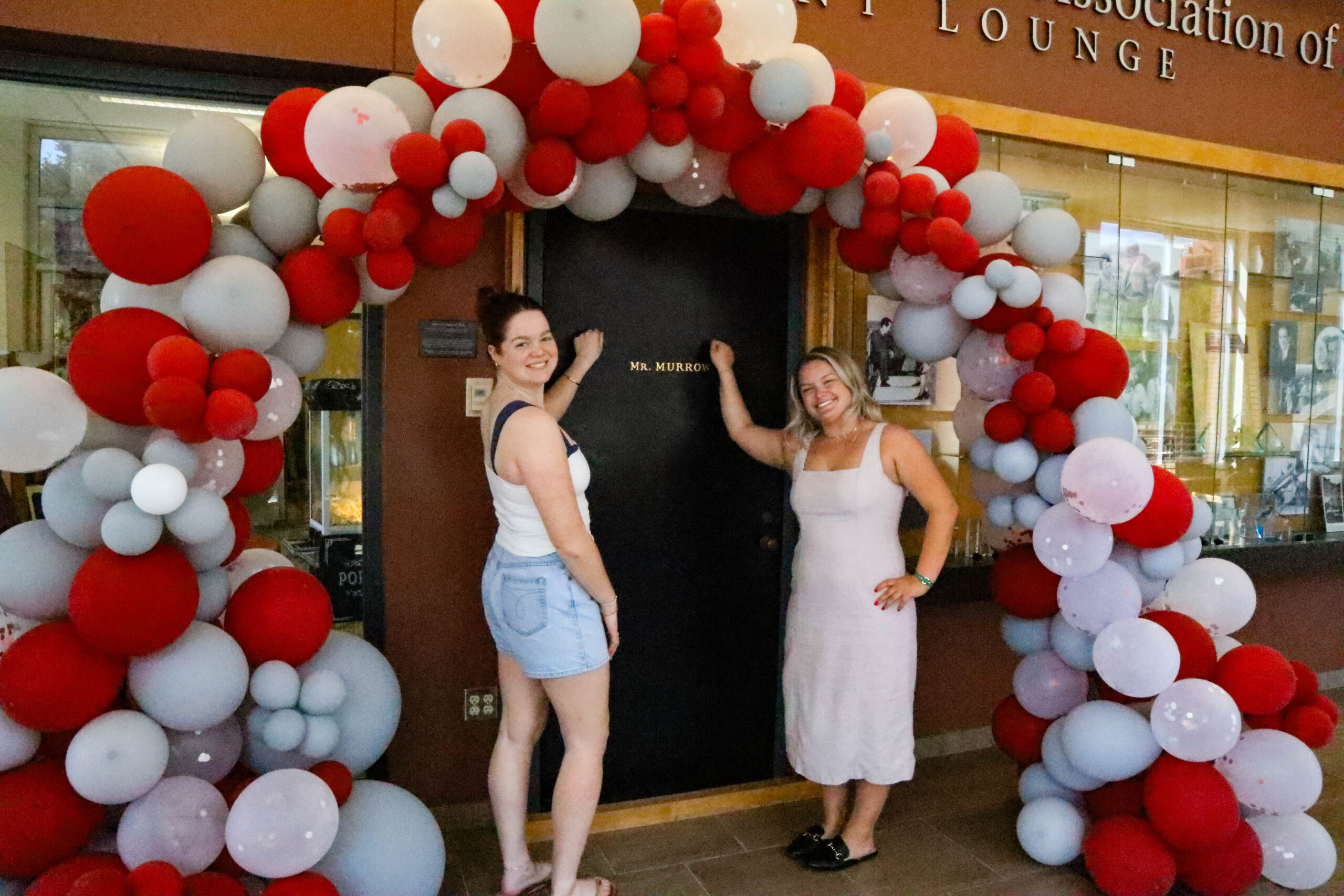
Murrow’s office door serves as a symbol for graduates of Murrow College who aspire to follow in his footsteps. Viewable in Goertzen Hall, it is a prized historical remnant that opened to a room where the future of broadcast journalism took shape. This door was donated in 2008 by Casey Murrow, Edward R. Murrow and Janet B. Murrow’s son, who received it from Murrow’s CBS colleagues Joseph and Shirley Wershba 1935-1961. They had the foresight and space to remove it from CBS in New York in 1960 and store it for safekeeping. It is now seen as the door to the future for graduating Murrow College Students who pose for photos as they wrap on the door at their graduation ceremony.
First KWSC Microphones
The earliest KWSC microphones date to the station’s founding years, when Washington State College’s first radio station operated under the call letters KFAE before becoming KWSC. These early microphones—some improvised from repurposed telephone components represent the beginnings of broadcasting at WSU and the hands‑on training of student announcers in the 1920s. The microphones are still on display today in the third‑floor hallway of Murrow Hall.
Capturing Conversation Before the Digital Age
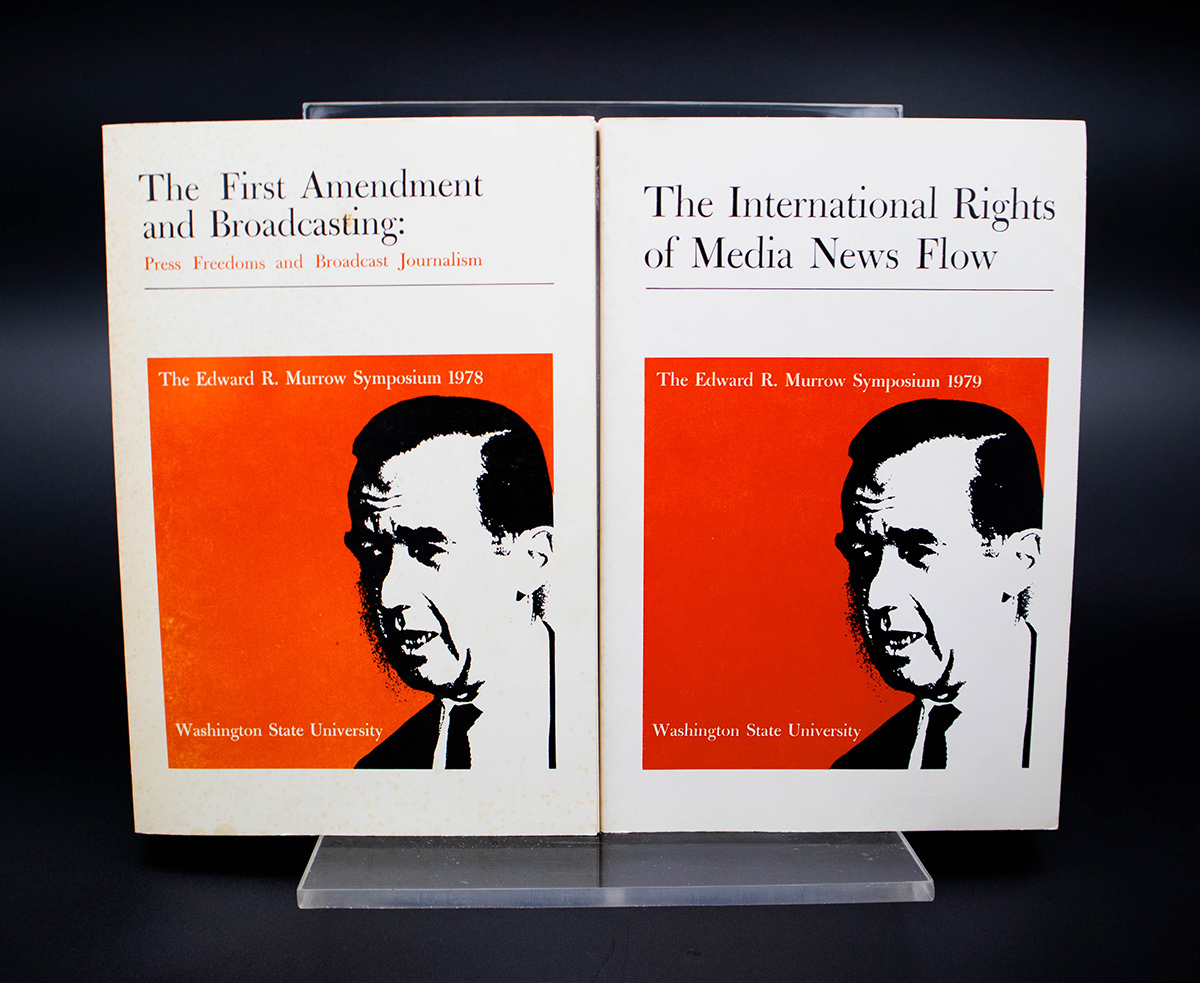
In an era when recording technologies were costly, time‑consuming, and difficult to share, the Edward R. Murrow Symposium relied on the printed word to document its legacy. Between 1977 and 1980, organizers produced annual books and booklets that captured the symposium in full—from keynote speeches to panel debates and commentary. These publications offer a rare window into how media professionals and scholars grappled with the rapidly changing communications landscape of the time.